
 Minesweeper
: How to Play, Strategy & Fair Play App Guide
Minesweeper is a clue-led game in which each choice can reveal information or increase risk; careful observation matters more than rushing. This guide explains a practical approach, the milestones to look for, and what the available game artwork can—and cannot—tell you.
More card games to explore
These compact suggestions are other cards-category options. Choose a tile to continue to the platform; the tiles are promotional actions rather than links to separate game guides.
 5 Card Poker
 Cards Hi Lo
 Coin Pusher
 Coin Toss
How to make a measured Minesweeper move
Start with the information already on the board; if a move is uncertain, pause instead of pretending it is safe. Minesweeper rewards players who use visible clues systematically. The exact board rules and controls can vary by version, so first check the in-game instructions and confirm what each number, marker, or action means.
This is a reasoning framework, not a promise that any choice will win. Minesweeper rounds may involve chance, and no pattern guarantees a favorable result. If you want another table-style experience after reviewing the basics, see Tongits; it is a separate game with its own rules.
What progress can mean in Minesweeper
A useful achievement is a better-informed decision, not simply a longer run. Minesweeper progress can be understood through observable stages: learning the controls, reading a clue correctly, resolving a group of neighboring cells, and recognizing when the remaining choice is uncertain.
These are learning goals rather than official badges, rankings, or guaranteed rewards. They provide a grounded way to review a session: Did you understand the clue? Did you check more than one possible explanation? Did you stop when your planned limit was reached? A thoughtful review can be more useful than chasing a perfect board.
For a broader look at the platform's selection and categories, visit Fair Play App Live Games. That destination covers other experiences; it should not be mistaken for a rule sheet or performance claim about this particular game.
The Minesweeper theme and decision rhythm
The defining experience is a quiet cycle of observing, inferring, and deciding. Rather than relying on a story premise, Minesweeper places attention on a compact field and the clues revealed from one action to the next. The tension comes from incomplete information: a cautious sequence can make the board easier to interpret, while a rushed choice can leave little room to learn.
The game belongs to the cards category in the available catalogue, but its clue-based decision loop is distinct from familiar hand-building card games. Before a session, take a moment to find the rules, understand the controls, and determine whether an action reveals, marks, or confirms a cell. Interface details should be checked in the live game rather than inferred from a small listing image.
A useful Minesweeper Demo, when available in the lobby, is best treated as a way to inspect the interface and learn the action flow—not as evidence that a later round will follow the same board or outcome. Practice can help with familiarity, but each new field may present different information.
Players who enjoy comparing different game formats may also browse Pinata Wins. It offers a different theme and pace, so compare the experience on its own terms rather than assuming the same tactics apply.
A visual reference for Minesweeper
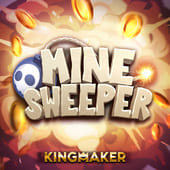
The image below is the game's catalogue artwork, not a captured game board. It identifies Minesweeper in the Fair Play App collection, but it does not show a live interface, numbered cells, controls, or an in-progress round. No board screenshot is presented here as though it were a real capture.
Minesweeper catalogue artwork
A preview graphic is useful for recognition but cannot substitute for interface evidence. Check the actual game screen for current details, and do not rely on a thumbnail to infer outcomes or rules that it does not display.
Where Minesweeper fits—and where it may not
Minesweeper can suit players who enjoy deduction and measured choices, but it is not a fit for anyone seeking guaranteed results or complete control. Its appeal is the feedback loop between a clue and a decision; its limits are uncertainty, version-specific rules, and the possibility that a choice carries risk even after careful thought.
A fair play app review should distinguish what can be observed from what is not confirmed. This page describes general clue-reading principles and the catalogue listing; it does not claim a particular return rate, payout, feature set, or certification for Minesweeper. Check the current in-game information and applicable platform terms before participating.
The phrase fair play app slot download may appear in broader platform searches, but it does not describe Minesweeper's game category here. The catalogue records this title as cards; use the relevant listing and its own instructions to understand what is available.
Key ideas for understanding Minesweeper
Knowing a few terms makes it easier to distinguish a logical deduction from a guess. These plain-language definitions describe common Minesweeper conventions; the in-game help remains the authority if a particular version uses different labels or rules.
Keep the distinction clear: a clue supplies information, a marker records an interpretation, and a decision is still the player's choice. A consistent method can make the reasoning more deliberate, but it cannot remove chance where the board leaves multiple possibilities.